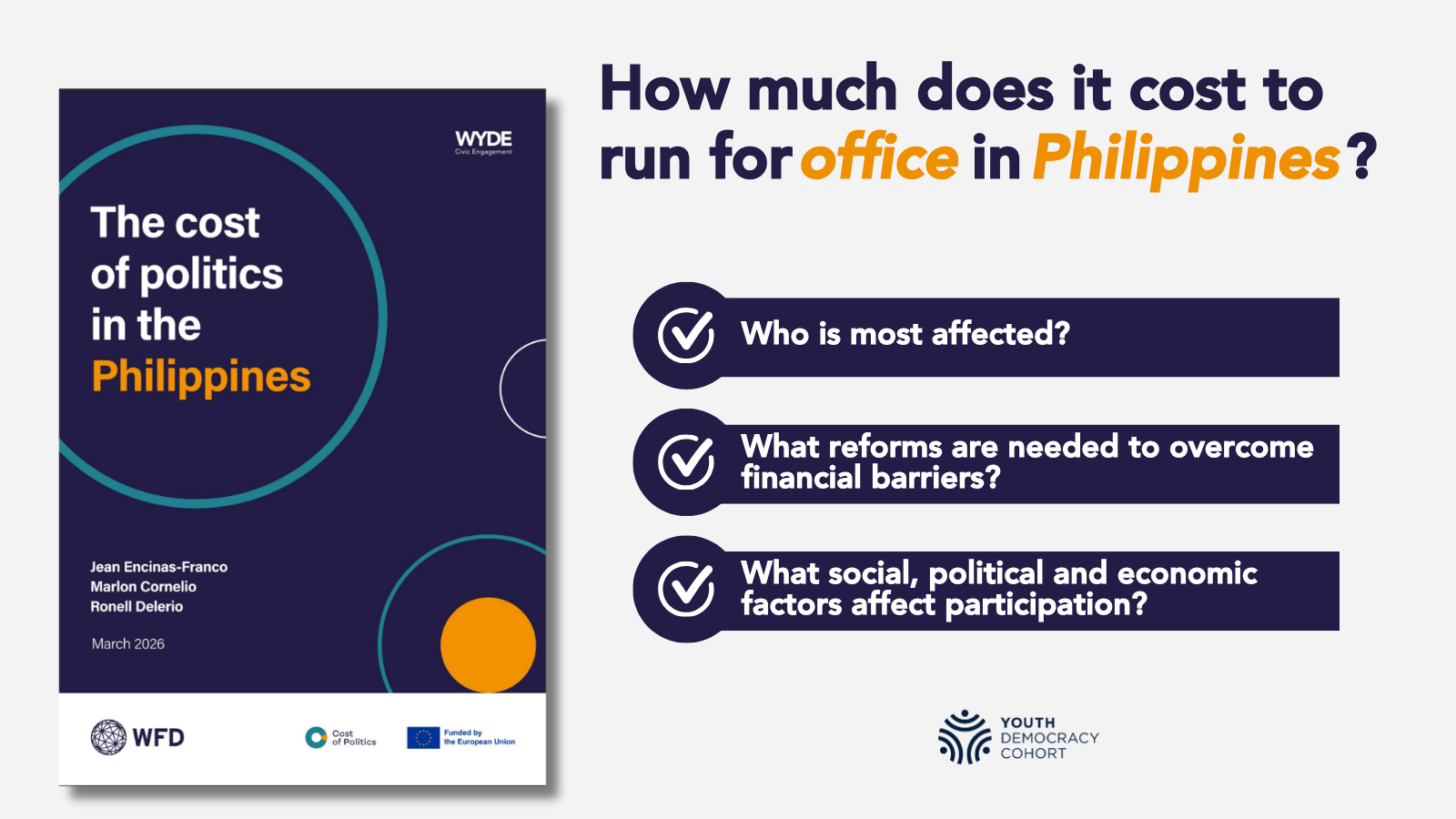
The 2025 mid-term elections in the Philippines, held under the administration of Ferdinand Marcos Jr., saw strong voter engagement, with over 68 million registered voters and an 82% turnout. Yet, beneath this high participation lies a political system shaped by entrenched inequalities. Electoral politics remains dominated by clientelism and political dynasties, where access to financial resources and established networks largely determines who can run (and win) public office.
This study highlights how the cost of politics creates significant barriers to entry, particularly for women, youth, and non-dynastic candidates. Campaign spending in the Philippines extends far beyond the official campaign period, with substantial “unofficial” costs incurred beforehand. Advertising represents the single largest expense, alongside costly surveys used to gauge and influence voter sentiment. Vote buying, though complex and informal, remains deeply embedded in electoral practices and continues to shape outcomes.
Incumbent politicians benefit from access to public resources, including discretionary funds and constituency-based allocations, giving them a structural advantage in re-election campaigns. Combined with weak political parties that are often personality-driven and prone to shifting alliances, this results in elections that are less about policy debate and more about name recognition and financial capacity.
These dynamics disproportionately exclude newcomers. Women in politics tend to come from wealthy or politically connected families, while youth representation remains extremely limited, especially for those outside political dynasties. Weak enforcement of campaign finance rules and outdated electoral regulations further compound these challenges.
The study calls for comprehensive reforms to level the playing field. These include overhauling electoral laws, strengthening oversight of campaign finance, regulating political dynasties, and investing in civic education to combat vote buying. It also emphasises the need to support more inclusive political participation by equipping parties and civil society with tools to promote gender equality and youth engagement. Ultimately, reducing the cost of politics is essential to making democratic participation in the Philippines more accessible, competitive, and representative.
This study is supported by the WYDE Civic Engagement project, which aims to empower youth in democratic processes. Through this research, the Cost of Politics reports unlock the unique processes of electoral participation and their impact on democracy in different countries.
