Why this guide?
Getting involved in institutional settings such as the African Commission on Human and Peoples’ Rights (ACHPR) can seem intimidating at first. Between all the acronyms, procedures, stakeholders to identify, and protocols to understand, it’s easy to feel lost.
The purpose of this guide is to equip young people who wish to get involved in this type of advocacy space. As YDCs, we had the opportunity to participate, and we wanted to gather the real-life experiences of several young participants: Laity, Abdoulaye, Faty, and Félicien—to turn their experiences into concrete, practical advice on what works, what’s surprising, and what we wish we’d known before going.
1. The ACHPR and the NGO Forum: Two Forums, One Cause
Before we talk about strategy, we need to understand what we’re getting into.
The ACHPR is the continental body responsible for promoting and protecting human rights in Africa, established under the auspices of the African Union. It holds two regular sessions each year, during which it reviews states’ compliance with the African Charter on Human and Peoples’ Rights, hears reports from Special Rapporteurs and thematic working groups, and adopts resolutions.
The NGO Forum, for its part, is held just before each regular session of the Commission. Coordinated by the African Center for Democracy and Human Rights Studies (ACDHRS), it brings together African and international civil society organisations to exchange ideas, coordinate efforts, and develop joint advocacy strategies ahead of the official session.
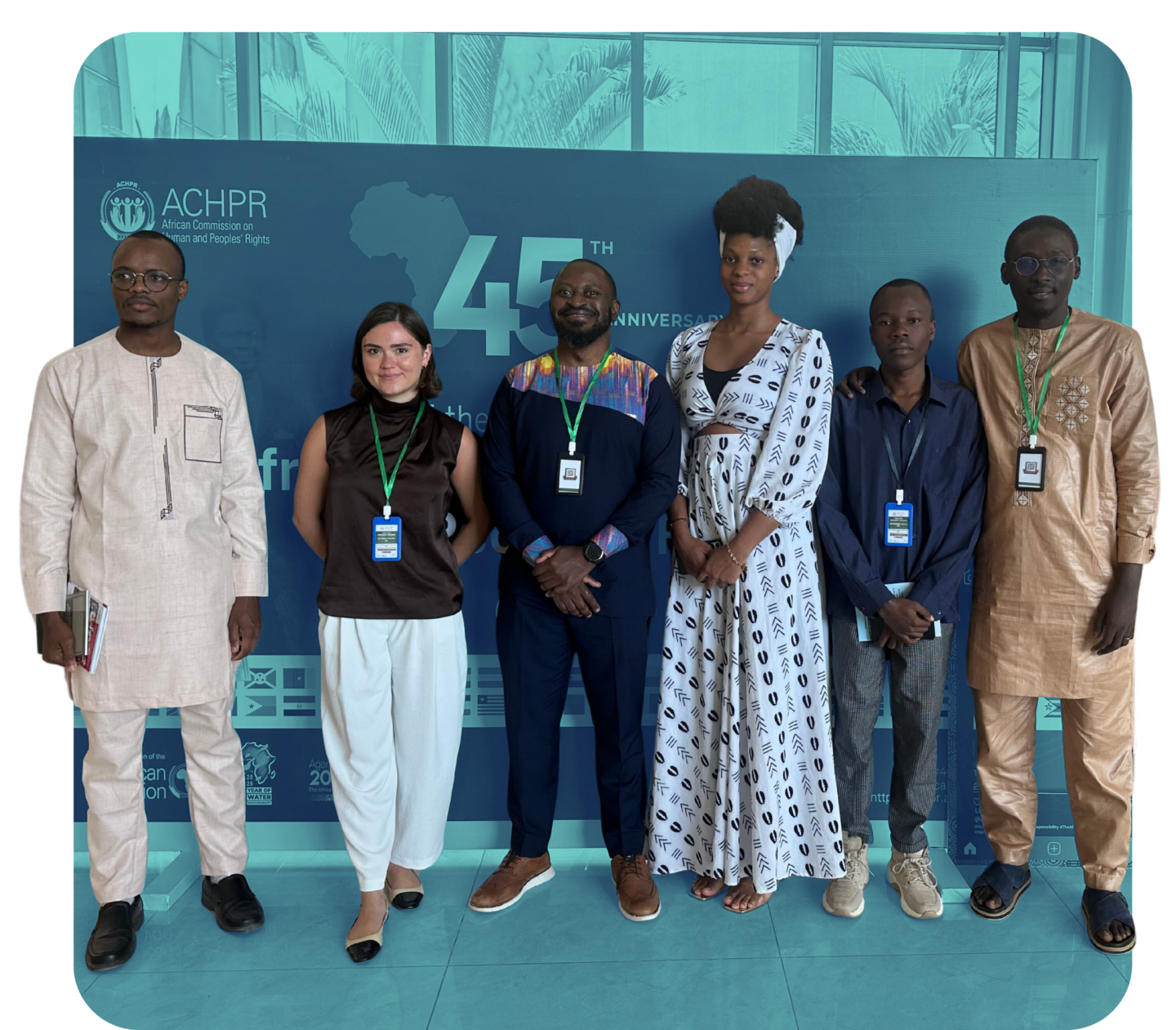
It is this interplay that makes the event so relevant to advocacy: the NGO Forum is the space where we refine our messages and build alliances among peers; the ACHPR session is the institutional forum where we present these messages to the Commissioners, state representatives, and special mechanisms. One paves the way for the other.
2. Getting Ready: What You Need to Know Before You Go
Preparation makes all the difference between passive participation and advocacy that makes an impact.
Effective advocacy requires thorough preparation: a clear and reasonable objective; an analysis of decision-makers and how to convince them; key messages and tailored arguments to persuade each type of audience; and the type of activity that will yield the greatest impact—all of these must be carefully considered and determined in advance.
“We benefited from advocacy training (…) This allowed us to strengthen our ability to express ourselves, present arguments, and organise our ideas in a more professional setting.” — Faty

To learn more, watch this video on the advocacy cycle is a good resource to watch beforehand: it helps put an event like the ACHPR into the context of a broader advocacy strategy, rather than viewing it as a standalone event.
A few practical tips to keep in mind before you leave:
- Registration must be completed in advance—usually several weeks before the session—by submitting an online form to the Commission Secretariat.
- Prepare a written statement in one of the working languages (French or English) and provide several copies for the Secretariat.
- The official speaking time is short (often around 5 minutes, sometimes reduced to 3 during a busy session), so it’s best to prepare a concise and impactful message rather than a text that’s too long.
- Don’t overlook side events: they are often the settings where relationships are built and the most concrete advocacy opportunities arise.
A sentiment shared by several participants: we don’t realise the full scope of the ecosystem until we’re actually there, so it’s best to arrive with clear objectives (what do we want to convey? To whom?).
3. What stood out to us: a wealth of ideas, profiles, and themes
Once we arrived, the event turned out to be much more intense and lively than we had imagined from reading about it on paper. “I was struck by the intensity and diversity of the activities organised by the NGOs in attendance, which reflect a very dynamic ecosystem.” — Laity
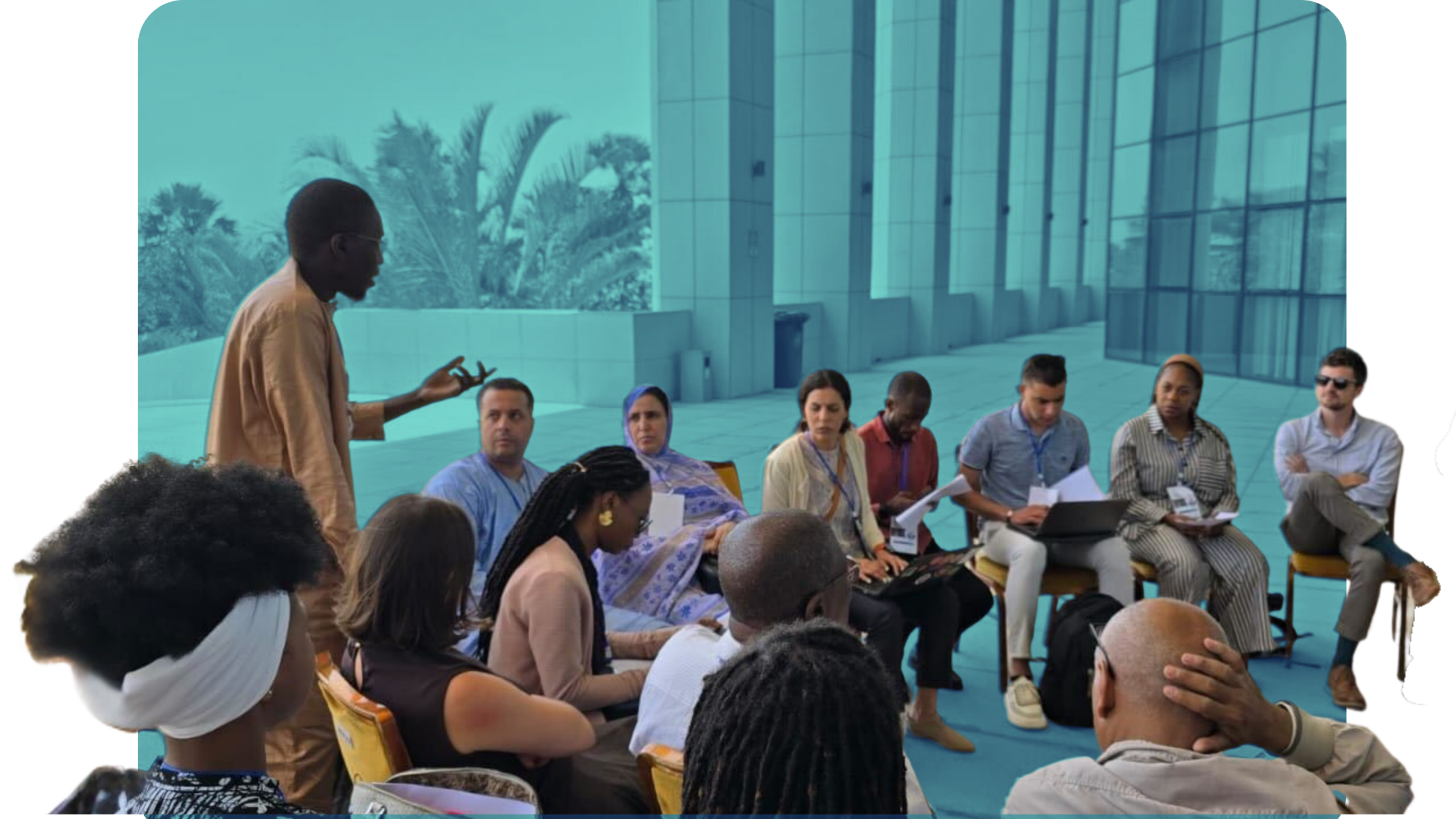
Beyond the plenary sessions, panel discussions, meetings, and side events, the ACHPR and the NGO Forum offer a valuable opportunity to build connections, share experiences, and expand one’s network. “The connections made at this type of event are just as important as the sessions themselves. ” — Abdoulaye
Interactions with young people from across the continent are also a highlight of the experience. “Despite our different contexts, we face similar challenges regarding human rights, civic participation, democratic governance, and the protection of civic space.” — Abdoulaye
To avoid feeling overwhelmed by the program and the number of participants, it’s important to review the program and identify the sessions related to your areas of focus, think about the types of people you’d like to meet, and prepare a message or a collaboration proposal tailored to each person.
4. What impact will this have on youth advocacy?
The impact of participating in the ACHPR cannot be measured solely by the statements made or the resolutions adopted. It is also measured by how the experience shapes a young person’s ability to advocate for others in the future.
“These spaces are formative. They expose young people to complex institutional mechanisms, influential figures, and substantive debates. Every young person who participates leaves transformed, better equipped, and more determined.” — Félicien
For Abdoulaye, the practical benefit was methodological: learning how to turn a local concern into a recommendation that could be applied at the continental level.
“This experience also gave me a better understanding of how to turn local concerns into recommendations that can be brought to the continental level.” — Abdoulaye
And beyond the individual experience, it is the very presence of young people in these spaces that is a fundamental issue for Félicien:
“Young people aren’t just the future—they’re the present. Their realities, their concerns, and their visions must be brought to the places where policies are shaped, where statements are adopted, and where rights are defended.” — Félicien
It is precisely for this reason that young people’s participation in this type of event should not remain a one-time occurrence, but should become a standard practice for youth organisations engaged in advocacy.
5. In a Nutshell: Tips to Keep in Mind Before You Go
1. Reach out to as many stakeholders as possible. Actively participate in discussions, and don’t limit yourself to the official sessions—side events are important.2. Prepare your message in advance, but stay open to input once you’re there: “Every contribution can add value to the discussions and strengthen youth representation in African advocacy forums.” — Abdoulaye
3. Position yourself as a decision-maker. “It is essential that young people not only be beneficiaries of public policies, but also active participants in the processes of deliberation, advocacy, and decision-making.” — Abdoulaye
4. Prepare for packed sessions and a large number of participants: carefully review the program and identify the sessions that are relevant to your work; decide in advance who you’d like to speak with; and prepare the messages you want to convey.
5. Document and follow up after the event: Advocacy does not end when the session is over; the recommendations made must be relayed to the national level to have a real impact.
Participating in the ACHPR means entering a dynamic, sometimes bewildering, yet deeply formative environment. Preparing thoroughly, being an active participant rather than a spectator, and continuing advocacy efforts upon returning home: these are what distinguish a meaningful participation from mere attendance. For young people who are still hesitant to take the plunge, the experiences of Laity, Abdoulaye, Faty, and Félicien speak for themselves: it is a space that transforms those who fully commit to it.
See you in Dakar on October 12, 2026, for the next session of the ACHPR. We’ll be there. How about you?