A WYDE Civic Engagement Research Project
This study follows naturally from the research carried out under the leadership of INTPA G1 on electoral procurement costs during 2021-2022. The earlier publications marked the EU’s first comprehensive methodological effort to shed light on one of the most elusive yet crucial aspects of technical assistance: electoral procurement.
The EDGE Foundation, in line with its mandate as an electoral knowledge facilitator and capacity builder, sought to bridge these initial efforts with the Women and Youth in Democracy (WYDE) – Civic Engagement project, which focuses on strengthening youth participation in the electoral process.
Voter registration remains the most costly, time-consuming and contentious component of many electoral processes. For young people in particular, it is often the main structural obstacle to meaningful participation in elections and public life. Shedding light on voter registration practices and the specific challenges faced by youth is, therefore, a necessary step toward removing entry barriers. Ensuring that every young person is on the voter register is an important democratic objective in its own right – not merely stage one of improving youth turnout on election day.
To this purpose, we selected 12 cases studies from around the world where a CSO group with a strong youth empowerment vocation could investigate and document existing initiatives and practices to eliminate or mitigate youth participation barriers, while at the same time promoting voting rights for youth and measure their overall impact on voter registration costs. The cases were selected to cover the following criteria: a) recent voter registration exercises in contexts with a large youth population, b) cases of passive voter registration systems (civil registry-based voter registration), c) cases of active voter registration systems ( ad hoc voter registration), d) cases of transition from active to passive voter registration; e) cases with increasing technology applications in voter registration processes and f) cases where legislative efforts have been made to lower the voting age criteria and increase youth vote.
This journey has taken us to highlight together with our partners measures and methods with which traditional barriers to voter registration have been addressed in very different geo-political contexts, to recognize measures that are generally effective to enhance youth inclusion and to detail the aspects of voter registration that have a significant impact on youth participation (systems, distance of targeted population from registration centers, modalities, fees, information campaigns, placement of registration centers, technology involved, biometric measures required.

Voter registration not only conditions the right to vote, but is often the least transparent component of an electoral process.
The key finding from these 12 case studies is that public information on electoral administrative costs remains insufficient, overly generic and not user-friendly. While, in most instances, electoral budgets are made public in accordance with legal requirements, they are frequently presented in a non-transparent format, significantly reducing their usefulness for oversight and accountability. In Mozambique, for example, the election-year state budgets from 1994 to 2019 only list overall annual election budget figures with expenditure divided into three general categories: a) staff costs, b) goods and services and c) current expenditure, which makes it impossible to determine the costs of specific electoral activities. Other case studies, such as Sierra Leone and Paraguay, report budgets presented in a similarly non-transparent manner. It is concerning that most researchers faced serious challenges in accessing reliable, comprehensive data on election costs, including per-voter costs. This lack of transparency, across a wide range of contexts, needs to be addressed. Weak budget disclosure and fragmented data provision not only undermine accountability but also deprive electoral assistance providers of essential information for planning and evaluating interventions. As the Mozambique case study observed, the format in which election budgets are presented makes it “virtually impossible to trace how public funds are allocated or spent.”
For these reasons, it proved difficult in almost all cases to quantify voter registration costs. In Greece, the challenge was slightly different. As voter registration is a municipal responsibility, costs are not included in the election budget but are part of the standard local government budget. Budgets are not explicitly earmarked for voter registration.
Furthermore, most case studies revealed that turnout data was not disaggregated by age, making it nearly impossible to evaluate the cost-effectiveness of initiatives aimed at youth participation. Several studies, therefore, recommend introducing electronic voter lists in polling stations to enable the production of youth-specific turnout data. As a result, and given that the costs of youth registration and voter education remain largely opaque across most contexts, it is difficult to properly evaluate assistance programmes.
Effective voter registration initiatives require baseline data and improved data management systems to enable the analysis and evaluation of registration systems and processes. Increased digitisation of electoral processes should be prioritised, alongside the reinforcement of monitoring and evaluation systems, for the benefit of the electoral administration itself and to enable civil society organisations (CSOs), funding partners and academics to better understand the voter registration process.
Case studies repeatedly recommend aligning funding cycles with the electoral cycle in order to increase the transparency and clarity of data. Advocacy for budget transparency should be a focus for future civil society support.
| The lack of transparent, comprehensive and easily accessible information about election costs is problematic, not only in terms of transparency and citizen oversight, but also in planning for electoral assistance and support. Addressing this issue is essential for fostering accountability and informed decision-making among stakeholders. (Kenya Case Study) |
The case studies highlight two categories of barriers to youth registration: firstly, a relatively standard set of geographical, infrastructural and administrative barriers; and secondly, a series of widespread cultural barriers associated with distrust of institutions and disillusionment with electoral participation as a means of effecting change.
In active voter registration systems, where voters register themselves, the case studies document a fairly consistent set of barriers to voter (and youth) participation. These are:
- Geographical barriers: Distance and travel time limit access to registration centres.
- Documentation barriers: Access to the documents required for registration, in particular birth certificates, and the direct and indirect costs associated with identification.
- Administrative barriers: Problems associated with the location and distribution of registration sites and the management of registration operations as well as the accuracy and availability of information. Particularly problematic are long wait times, queues, staffing and infrastructure issues, which force registrants to return multiple times to lodge or complete a registration. Biometric capture and voter ID issuance procedures also often require repeat or multiple visits. Each successive visit raises the barrier for registrants.
- Voter education deficits: Inadequate or poor geographical reach of voter education, together with poor communication with first-time voters, is a significant barrier in active systems. Almost all case studies (both active and passive models) recommended improved efforts in voter education, both within the school curriculum and through campaigns by the electoral authorities and by CSOs.
The experience in Mali demonstrates that requiring young adults to appear in person to provide biometric data for civil registration imposes the same barriers to youth participation found in active systems. Unless the transition to passive registration is carefully designed, it may simply relocate these obstacles rather than removing them.
Particularly problematic are active systems that require new registration for each election, such as those in DRC and Mozambique. The requirement to re-register compounds the adverse effects of geographical and administrative barriers and places a significant burden on socio-economically disadvantaged or geographically isolated citizens, many of whom are young people.
Furthermore, there are numerous country-specific barriers. The most frequently cited of these involve the registration of indigenous people and those facing language barriers, including lack of fluency in the official state language, illiteracy and digital illiteracy. In these cases, in particular, political parties often act as “service providers” to fill gaps in registration services (for example, ID issuance, address rectification and changes of polling centre allocation) by offering assistance or directly registering marginalised voters. These practices are often linked to vote buying and other forms of electoral corruption, as highlighted in the Paraguay case study.
There is currently no consistent, institutionalised set of policies in place in any of the countries studied to alleviate distance and travel barriers to voter registration. These costs are inevitably borne (unequally) by voters. The case studies, however, highlight a number of measures that can ease the registration burden in an active system, many of which use technology to replace paper-based processes or improve access, such as satellite links for mobile registration in the Philippines and online pre-registration in Brazil and Liberia. In 2023, the DRC introduced a new mobile app to facilitate online registration, but data synchronisation failed, and the registration centres were unable to retrieve the data, possibly due to a hacking incident. Most of these recommendations focus on using technology to streamline processes and eliminate the need for repeat visits related to biometrics. These recommendations are ameliorative of active registration systems rather than resolutive.
Mobile registration teams were cited by numerous case studies as a means of easing the travel burden for registrants, especially in more isolated, sparsely populated areas. Alongside recommendations to make these services more widely available, concerns were expressed that the mobile registration is often conducted in a non-transparent manner and is open to political manipulation. In the 2023–2024 elections in Mozambique, for example, the lack of transparency regarding the allocation criteria and the conduct of the mobile registration exercise gave rise to allegations of abuse by incumbents. Another recurring problem was inadequate information on the locations and schedules of mobile booths and biometric kits. In Kenya, the effectiveness of mobile registration at higher learning institutions (universities, colleges, and technical and vocational education and training colleges) was limited by insufficient information about the services offered.
The drastic reduction of registration sites to one third of 2015 levels in the latest election in Venezuela reflects a policy of discouraging the youth vote. One particularly positive example was the Register Anywhere Programme in the Philippines, a country where young people show a strong interest in voting. The one-stop registration hubs established in malls, schools, universities, government offices, churches and various private establishments (including corporate offices) have greatly facilitated eligible citizens in registering, updating their residence or marital status, reactivating their voting status and correcting their voter information. The success of the first phase of this programme has set the stage for a nationwide rollout.
While the case studies provide examples of effective interventions in support of young people’s registration, they also caution that high registration rates do not necessarily translate into high electoral turnout. Compulsory voting is interesting in this regard. In Brazil, it has resulted in high registration rates (census data and voter registration data closely match), but the registration rate for 16- and 17-year-olds, for whom voting is optional, remains low. This suggests that compulsion may condition behaviour, but does not address the root causes of non-participation.
Another effective driver of registration is the issuance of voter cards that function as ID cards. When the voter card is the cheapest or easiest form of identification available, young people have a strong motivation to register, but this is often associated with abuses. In the DRC, for example, the demand for identification documents induces underage registration. Voter registration inflation in Mozambique resulted in the number of registered voters in the 2024 elections exceeding the extrapolated population. Voter cards are also widely used for identification in Sierra Leone, where the introduction of a new national ID card has been subject to delays. While it is important to recognise that opportunistic registration is often problematic and generally does not increase electoral participation, it is, in itself, an important finding that utilitarian incentives bolster youth registration in active systems.
The consensus across the case studies is that the most effective means of definitively removing the standard barriers to youth voter registration is passive voter registration.
| Consideration should be given to automatically including all eligible voters from the civil register in the voter register without requiring them to appear in person at the registration centre to confirm their data. Enhanced options for online verification and confirmation of voter data should be provided. The civil register should include all the data fields required for voter registration. (Sierra Leone case study) |
The Global Youth Participation Index shows that young people want greater investment in and commitment to mechanisms that make it easier for them to register and to vote, including automatic voter registration and more effective voter education campaigns. Technological solutions can reduce traditional barriers and appeal to a tech-savvy generation. In fact, one of the main recommendations across the case studies was to use technological innovation to remove barriers to participation.
In active voter registration systems, online pre-registration mechanism were often seen as effective in streamlining the registration process. In Liberia, an online registration application placed urban youth with reliable internet access at the centre of the process. Many young people used the online application not only for themselves but also for family members, often serving as registration enablers for their families. In Brazil, the shift to fully online registration during COVID-19 (as distinct from pre-registration) greatly benefited young, digitally-savvy first-time voters, but it was later discontinued due to a requirement for in-person biometric capture. In the DRC, an online portal for verifying registration and checking polling station allocation is accessible by using either the voter’s eleven-digit national number (NN) or by scanning the QR code on the voter card. The most repeated recommendation in relation to active registration was to leverage technologies to simplify the registration process, especially by using online registration and pre-registration or online verification to eliminate the need for repeated in-person visits to registration centres.
There is, however, a more deeply-rooted problem with youth participation. All case studies indicated pervasive youth disengagement from electoral processes – a widespread cultural trend, across both young societies (such as Africa) and ageing ones (such as South America and Europe). Standard barriers can be lowered through modernisation and investment in registration services, but disaffection, mistrust of institutions and disenchantment with the electoral process pose a far more fundamental challenge. In Kenya, for example, there has been an increase in overall registration, but a decline in youth registration. It is difficult to escape the conclusion that young people value electoral participation less than older generations, for whom, if nothing else, the voting habit has been to some extent established. As the Brazil case study concludes, the greatest obstacle to youth participation in elections is a lack of interest.
Nevertheless, the case studies demonstrate that young people do respond when they perceive their participation as decisive or as meaningful – and when messaging is effectively targeted to them. In 2022, a broad, multi-organisational campaign characterised by civil society digital outreach and the participation of public figures and celebrities contributed to historically high first-time voter registration rates in a decisive Brazilian election. Youth engagement was fuelled by political polarisation and supercharged by the Bolsonaro re-election bid. Similarly, civic campaigns in a key electoral process in Venezuela (2023–2024) achieved the first increase in youth registration in nearly a decade, despite repressive state countermeasures, proving that youth-centred mobilisation can yield results even in constrained environments. The Philippines case study interviewed a political communications expert who ascribed the strong interest among young people in registering for the 2022 national elections to the clear drawing of “lines”, the prevailing sense of urgency as well as to improved access to information via the Internet and the vigorous campaigns by competing camps to mobilise the youth vote. The overarching lesson emerging from these successes mirrors the conclusion of the Brazil case study: the two main obstacles to youth voter registration are a lack of information and disinterest in politics.
It is important to distinguish between voter registration, a prerequisite for exercising the right to vote, and the decision not to utilise that right. In a political system that offers little to young voters or when voters are faced with electoral choices that fail to convince, abstention rates are bound to be high. Nigeria, for example, where 70% of the electorate are under 30, only offers its young voters the option of electing “mature” candidates. The Mozambique case study cites interesting research that contrasts high levels of willingness of young people to engage in local-level decision-making with equally high levels of perceived exclusion. The need to open up participation is another lesson learned.
Most case studies recommended improved civic education in schools to address youth disengagement. Of particular interest are the youth-led registration and get-out-the-vote campaigns that emphasised social (online and in-person) connections and used communication styles that appeal to young people.
Another cross-cutting lesson is that legal reforms alone are not sufficient to ensure youth participation. Measures such as lowering the voting age are only fully effective if accompanied by civic education, trust-building and inclusive communication tailored to young people. The top-down process of reducing the voting age from 18 to 17 in Greece (2016), for example, did not achieve the desired increase in participation. The authors of the Greek case study attribute this to the lack of pre-existing demand for the extension of the franchise and to the failure to develop a process that would allow such demand to emerge.
Too often, political parties and governments pursue policies to extend (or limit) youth participation based on perceptions of electoral advantage. Presumed or real assessments of the voting preferences of young people should not determine policy. Advocacy for a rights-based approach to promoting youth participation is another area for possible engagement.
| Young people choose not to vote because they feel that voting achieves nothing. This deep-seated conviction is not only common to most democracies but is shared by other age cohorts, which, however, still maintain “the voting habit”. As first-time voters have not yet developed this habit, the impact of the distrust and disillusion has particularly serious consequences for them. This suggests there may be two main directions for intervention. First, establish the voting habit in first-time voters through a wide variety of activities, campaigns and school-based actions, and second, start meeting young people where they are in order to understand the crisis of trust in representative democracy at the core of abstention. The practice of listening to youth and their needs should be prioritised in order to develop not only a better understanding of their views but also to develop tools for more effective voter participation campaigns. Targeted research on Gen Z is a source of increasingly rich and comprehensive data which can be used by political parties and civil society organisations to tailor their awareness-raising campaigns to the real needs, perceptions and preferences of young and first-time voters. (Greece case study) |
The case studies documented the very different obstacles to youth voter registration in the two registration models. Active registration requires first-time voters to travel to registration centres, present multiple documents, have their biometrics captured and then often return for repeat visits. This creates significant financial and logistical barriers – especially for rural or marginalised youth. Three-quarters of case studies recommended online registration or pre-registration to make the process more youth-friendly.
As noted in numerous case studies, passive registration, integrated with civil registries, avoids most of the abovementioned non-cultural barriers to registration. For example, the Greek system of passive voter registration linked to civil registration was considered to have removed most of the youth-specific obstacles to registration, despite the limited information provided to first-time voters. Along with the barriers themselves, automatic civil register-based voter registration eliminates associated corrupt practices, such as the block registration of indigenous communities practised by some political parties. However, implementation is not without challenges. A modern, digital civil registration system is a significant administrative undertaking that requires effective, sustained coordination and cooperation among multiple ministries and government agencies. In some contexts, such as Sierra Leone, this has proven difficult. Even in contexts such as this, where implementation is proving challenging, there is consensus on the direction of travel. The challenges are not only technical. In 2022, the government of the DRC issued a series of decrees to create synergies between the voter register, the civil status register and the general population census by pooling human, technical, logistical and material resources. This was not implemented, however, as it was perceived as a ploy to delay the 2023 elections.
When registration is automatic, the main residual barriers for participation are inaccurate or outdated address data and incorrect allocation of polling stations. In Paraguay, for example, an estimated 4% of automatically registered voters have incomplete, inaccurate or out-of-date address records, which impacts polling station allocation. In-person rectification of errors in a passive system involves the same standard challenges of time, distance and costs (transport and documentation) as registration in active systems, but affects a much smaller section of the electorate. Critically important Information for first-time voters on the need to verify data accuracy is often inadequate. Case studies show that after moving to passive registration, voter education and public information campaigns are often scaled back. Although there is clearly less need for extensive voter registration campaigns, citizens still need to verify the accuracy of their data, particularly addresses (and polling station allocations). Implementing passive registration does not absolve the electoral administration from its responsibility to provide clear guidance on the registration process, particularly for first-time voters.
In Africa, biometrics, first introduced in DRC in 2004, has played an important role in reducing duplication and underage entries, but it has not resolved the problem. In Mozambique, where biometrics is used for deduplication after registration, multiple registration remains a serious problem, with credible allegations that so-called ghost registrations are linked to ballot stuffing. In Liberia, biometrics was introduced as a result of a Supreme Court judgement calling for technological improvements, in particular biometric voter registration, to enhance the accuracy of the voter registry and to reduce electoral fraud. The court’s judgment was also a response to ongoing public concerns about multiple registrations in previous elections and was seen as a step towards restoring public confidence in the electoral process.
Government management of sensitive data, particularly biometrics, is a matter of legitimate concern, especially when lines between the state and the ruling party are blurred. Incidents such as the data leaks described in the Philippines case study (see below) reinforce the need for strong safeguards and effective oversight of state data collection and use. At the same time, data privacy concerns, whether genuine or used as a pretext, should not prevent the implementation of trust-building transparency measures such as independent audits of voter registers and the sharing of searchable data with electoral stakeholders. A key lesson learned from Paraguay was that databases of voter lists shared with political parties assist in registration and verification efforts and can be used to create user-friendly applications for checking personal data and assigned polling stations. Balancing these competing rights and priorities is crucial to maintaining both privacy and confidence in electoral processes.
Irrespective of the voter registration model adopted, it is of fundamental importance that no eligible voter is excluded, or can be excluded, whether through the voter’s inability to comply with documentation requirements (a particular risk in active systems, but not only) or for political reasons.
The trend towards integrated e-identity systems across regions such as Africa (for example, Kenya, Nigeria and Sierra Leone) makes it increasingly difficult to justify the continued use of active systems, given the barriers they create to registration and the costs involved.
| Since coming into force in 2012, the shift to a passive system of registration has largely removed the barriers to the registration of young people as voters. The cost-effective procedure requires extensive inter-institutional collaboration between the EMB and the other entities responsible for population registration, the address register and the issuance of personal identification documents. The main barrier remaining concerns the relatively high number of new registrants with missing, inaccurate or out-of-date addresses. (Paraguay case study) |
The case studies underlined the importance of enhancing civic and voter education with a special emphasis on first-time voters. They recommended not only increased funding for voter education and information campaigns but also the strengthening of curricula in schools and higher education. The Venezuela case study, for example, proposed using inductive learning techniques, such as mock voting, to increase engagement. Nearly all case studies recommended dedicating more time to voter registration within comprehensive voter education in schools.
Civic education in Paraguay, for example, is included in the curriculum of primary and secondary schools, as well as in lifelong learning programmes (for those over 16 who did not finish their studies at the expected age). It provides information on registration and voting. According to the case study, the initiative Electoral Justice in my School has been particularly successful. Since 2015, this programme has provided civic education and electoral information to students in their final year of secondary school to encourage first-time voters to verify their data in the voter register. Typically, a technical team from the electoral administration conducts two visits to each school: an initial visit, followed by a second during which registration, verification and updates are carried out for students in possession of identity cards. Other case studies emphasise the role of tertiary education institutions in supporting registration.
Various case studies proposed a greater openness on the part of schools and universities to allow civil society groups to conduct awareness-raising activities for first-time voters in educational institutions, using peer-to-peer formats. This is a potential issue for civil society advocacy.
A key insight across all case studies is that effective mobilisation depends not only on the message itself but also on youth-centric delivery. Institutional messaging framed around civic duty, for example, was found to be counter-productive in Mozambique. Reflecting an experience common to youth across most of the case studies, young Kenyans described the EMB’s communication and awareness-raising efforts as outdated and unappealing.
| The 2022 voter enlistment campaign for first-time voters is a success story that deserves to be discussed in more detail. Initially driven by electoral authorities, the campaign’s reach was significantly amplified through the active engagement of various CSOs, electoral stakeholders, public figures and celebrities. Despite the limited formal cooperation between the EMB and the CSOs, the unprecedented engagement of civil society was a major success of the 2022 voter registration campaign. Interviews with some CSOs also highlighted an unprecedented level of engagement from the electoral administration in support of young voter registration. Further, it must be noticed that the re-election bid of the far-right president Jair Bolsonaro may have catalysed mobilisation. (Brazil case study) |
With few exceptions, the case studies highlight persistently low levels of trust in EMBs. This significantly weakens the effectiveness of institutional voter education. In some countries, this distrust stems from clear administrative failures. In the Philippines, for example, the massive 2022 leak of voter data severely undermined public confidence in electoral administration, coming as it did in the wake of another significant data breach in 2016 and another in 2017. Paraguay stands out as a rare exception within Latin America and across the studies of an EMB that enjoys high levels of trust due to its independence, impartiality and long-standing commitment to maintaining a reliable and accurate voter register. The introduction of passive registration in 2012 further enhanced this positive reputation. Yet even in such favourable circumstances, civil society remains essential to sustaining democratic engagement.
CSOs bring credibility, community embeddedness and communicative versatility, which state institutions typically lack. The lessons from the case studies underscore that youth-led and youth-facing CSOs are best positioned to communicate in ways that resonate with young people and address their specific concerns. In Nigeria, it was precisely this youth-led mobilisation that generated momentum in 2023, offsetting the shortcomings of the institutional campaigns. This peer-to-peer model of mobilisation consistently emerged from the studies as the most effective approach, with young people responding more readily to messages delivered by those who share their experiences, social references and aspirations. As the Kenya case study states, the involvement of CSOs is vital for bridging the gap between electoral institutions and the public and for ensuring that marginalised voices are heard.
There are numerous examples of the results achieved through youth-focused outreach tailored to online culture and creative customisations of social networks otherwise used for gaming or entertainment. In Venezuela, recent civil society registration campaigns illustrate the advantages of developing creative alliances involving universities, the education sector, political parties and the business community. These partnerships broaden outreach and help create messaging tailored to young people’s communication styles. Learning-through-gaming initiatives and other forms of gamification were cited in a number of case studies as particularly effective because they utilised the socialisation codes, vocabulary and frameworks familiar to young audiences. Rather than lecturing young people about their civic responsibilities, which is still the preferred mode of much institutional communication, the most successful approaches treated young people as capable citizens whose perspectives merit consideration. Accordingly, communication strategies grounded in self-expression – rather than top-down moralising – proved not only relatively inexpensive but also the most effective.
The case studies consistently underscored the value of online communication, yet several also noted that genuine trust is more easily forged through face-to-face interaction. Civil society groups like Voto Joven in Venezuela demonstrated that framing voter registration as a shared, community-based activity – rather than an individual responsibility – can encourage young people to sign up alongside friends, classmates or neighbours. This collective approach helps ease the anxiety often associated with navigating unfamiliar environments, such as registration offices. The Philippine case study similarly highlighted youth-led organisations that take on responsibilities such as securing registration appointments, providing transport to registration centres and advocating for the extension of voter registration deadlines.
The Nigerian case study highlights both the potential and the limitations of civil society engagement. The deep political apathy among Nigerian youth stems from long-standing distrust of government institutions, widespread insecurity and a political culture dominated by older elites. Although youth voter registration increased significantly ahead of the 2023 elections, partly due to youth-led mobilisation following the #EndSARS protests and partly because the voter card was used as an identity document, turnout remained low. Youth-led CSO campaigns on university campuses proved effective, as did music events that required a voter card for entry. In rural areas, faith-based organisations played a key role, although their contributions received relatively little recognition. The Nigeria case study recommends sustained collaboration among institutions, CSOs, youth groups and public and private sector stakeholders for future campaigns.
The case studies make clear that effective engagement requires listening carefully to young people and grounding interventions in research that reflects their perspectives. Structural political issues – such as unrepresentative candidate pools, insecurity and entrenched distrust – cannot be addressed through civic education alone. Instead, meaningful youth inclusion demands broader reforms, including changes in political party practices, candidate selection and the issues foregrounded in electoral campaigns.
Funding for national organisations, investment in capacity-building and the development of educational materials are considered essential. Enhanced research efforts are also needed to generate reliable data on youth voter registration, enabling more targeted and evidence-based interventions. Both national and international organisations should promote knowledge exchange and offer support to strengthen youth voter registration programmes. Importantly, youth-led CSOs should be recognised as key agents of democratic change and provided with the resources, mentoring and platforms needed to perform this role.
Taken together, the case studies demonstrate that civil society is indispensable to promoting youth voter registration and participation. Whether operating in active or passive registration contexts, CSOs, especially those led by or working closely with young people, possess the credibility, agility and cultural fluency needed to engage youth effectively. Their efforts not only help to overcome immediate barriers to voter registration but also contribute to the long-term renewal of democratic life by fostering a sense of agency, inclusion and political belonging among young people.
| The campaign Yo me inscribo con todo became one of the most effective efforts to mobilise youth voter registration in Venezuela – not by relying on official channels, which were opaque or inactive, but by meeting young people where they actually are: on social media, in group chats and on the street. Through POV-style videos, Instagram reels and interactive stories, the campaign made the act of registering feel relatable, urgent and even cool. It avoided politicised narratives and instead framed voter registration as a personal and collective right. Activists used QR codes in schools and parks, collaborated with local influencers and coordinated group visits to electoral centres – transforming what was once an isolating and bureaucratic task into a collective, social experience. (Venezuela youth-led CSO, Voto Joven, presentation on the lessons learned from the 2022 youth registration campaign) |
Conclusion
Youth engagement is indispensable for the vitality and ongoing renewal of democratic systems. The case studies demonstrate that young voters increasingly expect streamlined, digitally enabled registration procedures and systems characterised by transparency and accountability.
Reforming voter registration and responsibly promoting digital solutions can lower barriers and empower young voices. Each step, however, must carefully balance the protection of personal data with the imperatives of accountability and oversight, ensuring that voter registration serves democracy – not digital authoritarianism. Transparency and access to information thus remain fundamental pillars of trust in voter registers and in those who administer them.
Technology remains a double-edged sword at every stage of youth democratic engagement. It can be deployed repressively to discourage or control participation, yet it is also one of the most powerful –and most cost-effective – enablers of youth involvement. Our responsibility is to ensure that its responsible, inclusive and creative use prevails.
Election costs remain non-transparent or difficult to scrutinise in most of the countries covered by these case studies, and comprehensive data on youth participation is generally unavailable. Addressing these gaps should constitute a priority for civil society advocacy and a focus for donor engagement.
The case studies recommend a range of interventions to remove or mitigate existing barriers to participation in active registration systems – many of which rely on technology to simplify administrative processes. Important lessons have emerged from effective youth-focused registration campaigns in which the choice of medium, style and messenger is carefully attuned to young people’s preferences.
Nevertheless, passive registration emerges clearly as the most effective means of eliminating administrative barriers to registration. Automatic registration alone cannot be expected to enhance electoral participation.
As observed in numerous case studies, the most significant obstacle to participation is a profound deficit of trust. The Philippines case study similarly notes that “there is a prevailing scepticism regarding representative democracy and the impact of an individual’s vote. This socio-cultural barrier leads to disconnection from the democratic process and widespread voter apathy and disillusionment. It also fuels failure to register.” Young respondents across all studies report significant distrust of political institutions, especially political parties. Their experiences often involve marginalisation and a sense of powerlessness, which fosters apathy or cynicism.
To address disengagement, most case studies advocate substantial investment in high-quality, curriculum-based civic and voter education in schools, as well as in youth-oriented outreach campaigns conducted by civil society. Yet the challenge is deeper and more structural. What emerges clearly is the inadequacy of top-down approaches: meaningful progress requires that young people be listened to with care and seriousness so that the successes, such as those identified in this research, can be effectively maintained and extended.
The nonparticipation of any demographic group in the electoral process diminishes democratic legitimacy. But the non-participation of young people in democratic life constitutes a very specific challenge both in the short and long term. Political apathy and disengagement among youth result in less responsive representation, poorer political services and a general decline in democratic stability. Sustaining democracy, therefore, depends on ensuring that young people see themselves not as spectators but as the actors in shaping their political future.
Author: Robert Adams
Case studies by country


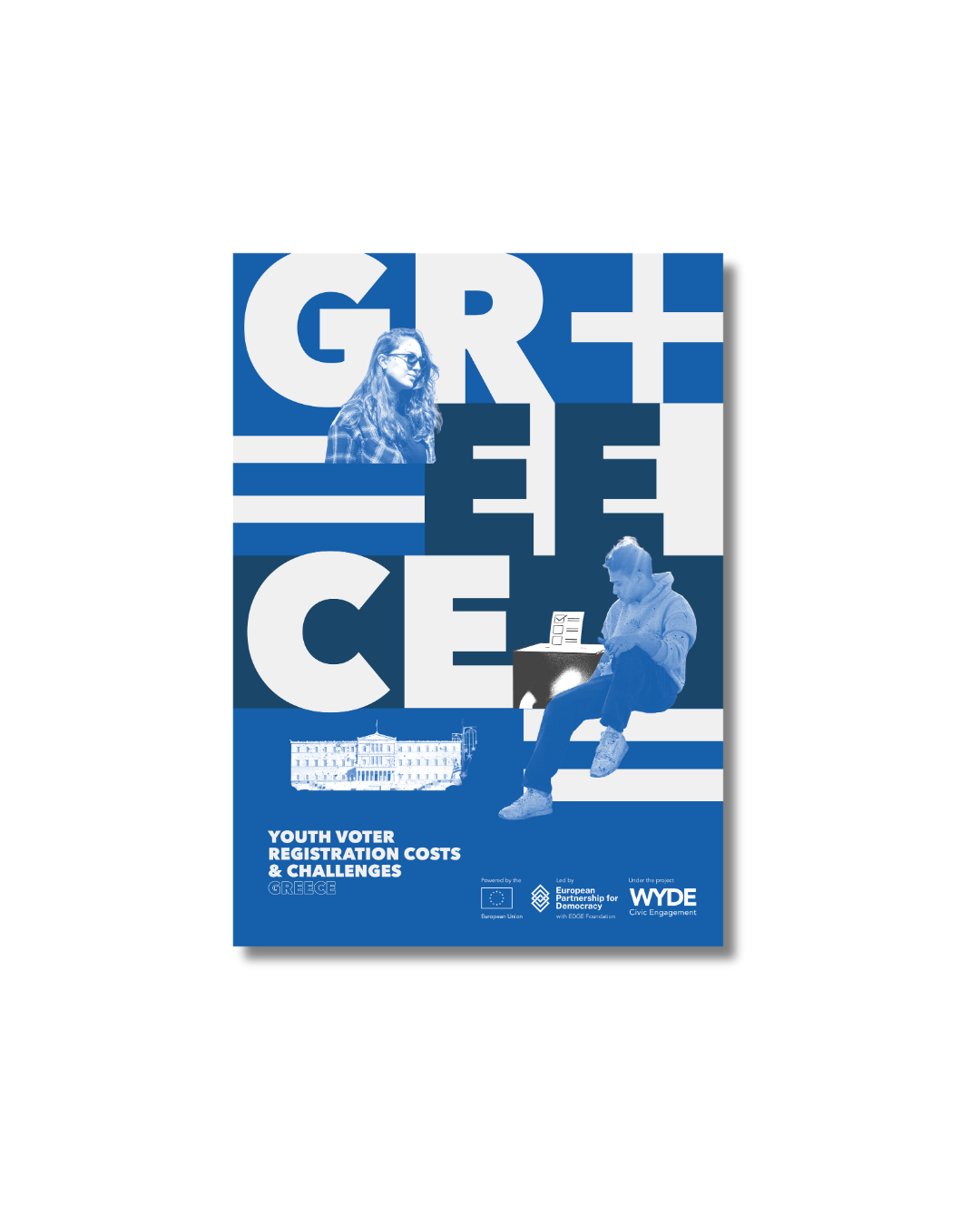

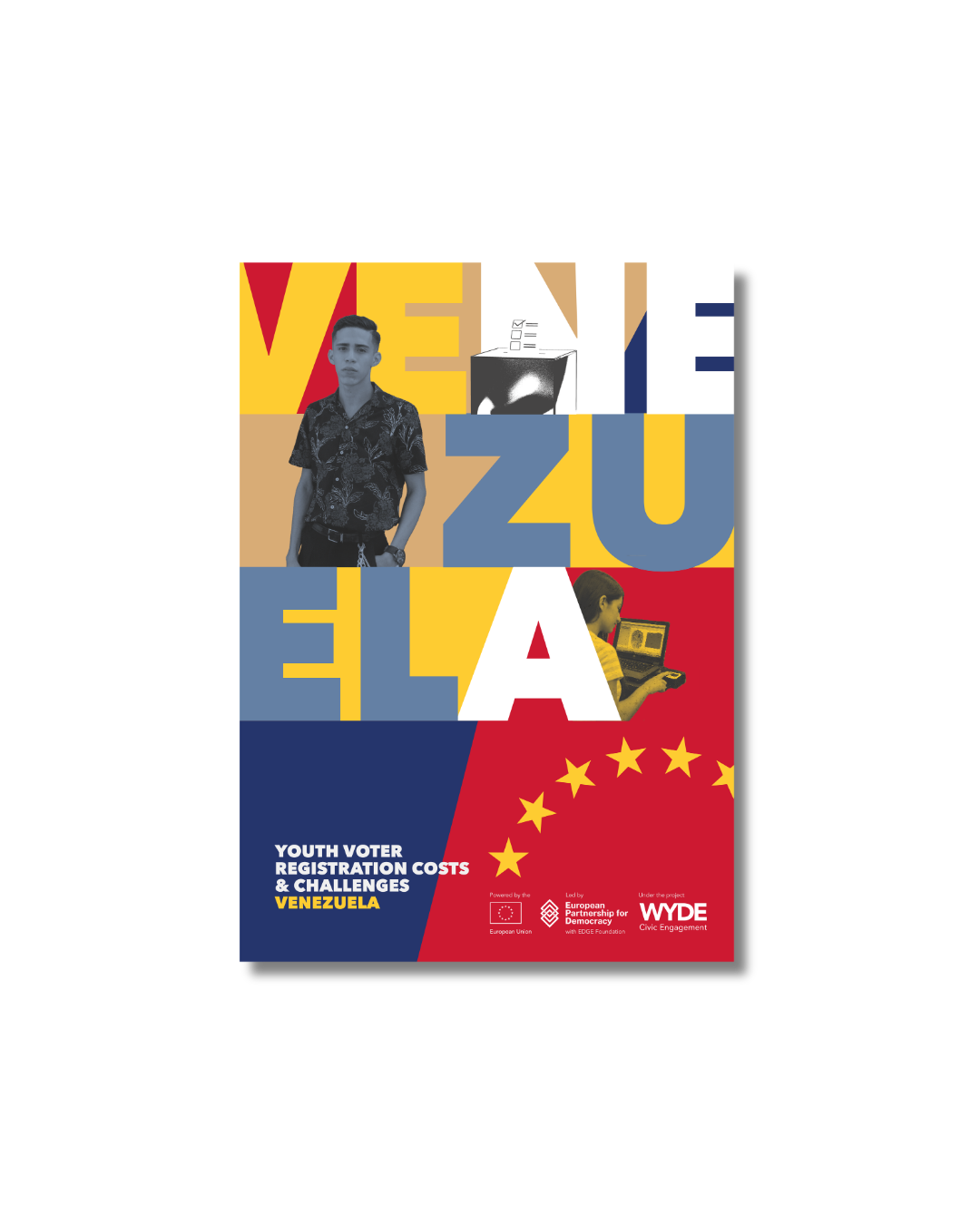
More countries soon
This study was produced by EDGE Foundation and supported by the WYDE Civic Engagement project, which aims to empower youth in democratic processes. Through this research, the Youth Voters Registration Costs and Challenges reports unlock the unique processes of electoral participation and their impact on democracy in different countries.