Professional media working alongside civil society to promote stability and social cohesion in Cameroon

Cameroon


ABSTRACT

The “TALK PAIX” project focuses on the role of the media as a catalyst for national dialogue, social cohesion and stability in Cameroon. Other sectors are also targeted, including concerted dialogue for peace with civil society and local authorities in the context of decentralization, the representation of women and sexist stereotypes in media content, and the involvement of young people in conflict reduction through their use of social networks.
PROJECT DESCRIPTION

The “TALK PAIX” project was launched in response to a triple challenge:
- The lack of media capacity to provide the population with reliable, depolarised and nuanced information in a context of multi-dimensional crisis particularly affecting the Far North zone (Lake Chad basin) and the two English-speaking regions of North-West and South-West (NOSO);
- Their lack of skills and experience in producing interactive programs, produced in collaboration with civil society, to facilitate citizen participation in public debate, particularly that of women, and the promotion of a peaceful dialogue between all stakeholders in this debate;
- The lack of awareness among young people, including those who are members of civil society organisations active in crisis zones, of the mechanisms of misinformation, which still too often leads them to unwittingly become vectors of false information and relays of hate speech and exclusion on social networks.
Co-constructed with two Cameroonian civil society organisations, this 24-month project began in June 2022. Its main beneficiaries were a dozen large-audience media outlets, members of civil society and youth groups engaged in public debate.
The project focused on three main activities:
- Training journalists in news verification and conflict-sensitive journalism, including gender issues,
- Production support for interactive programs.
- Media literacy and digital citizenship workshops for young people, half of whom were women. These activities specifically targeted crisis zones, theFar North and the two English-speaking regions (NOSO). The approach included training of trainers, seminars, coaching and multi-stakeholder consultation meetings to maximize impact on the ground.
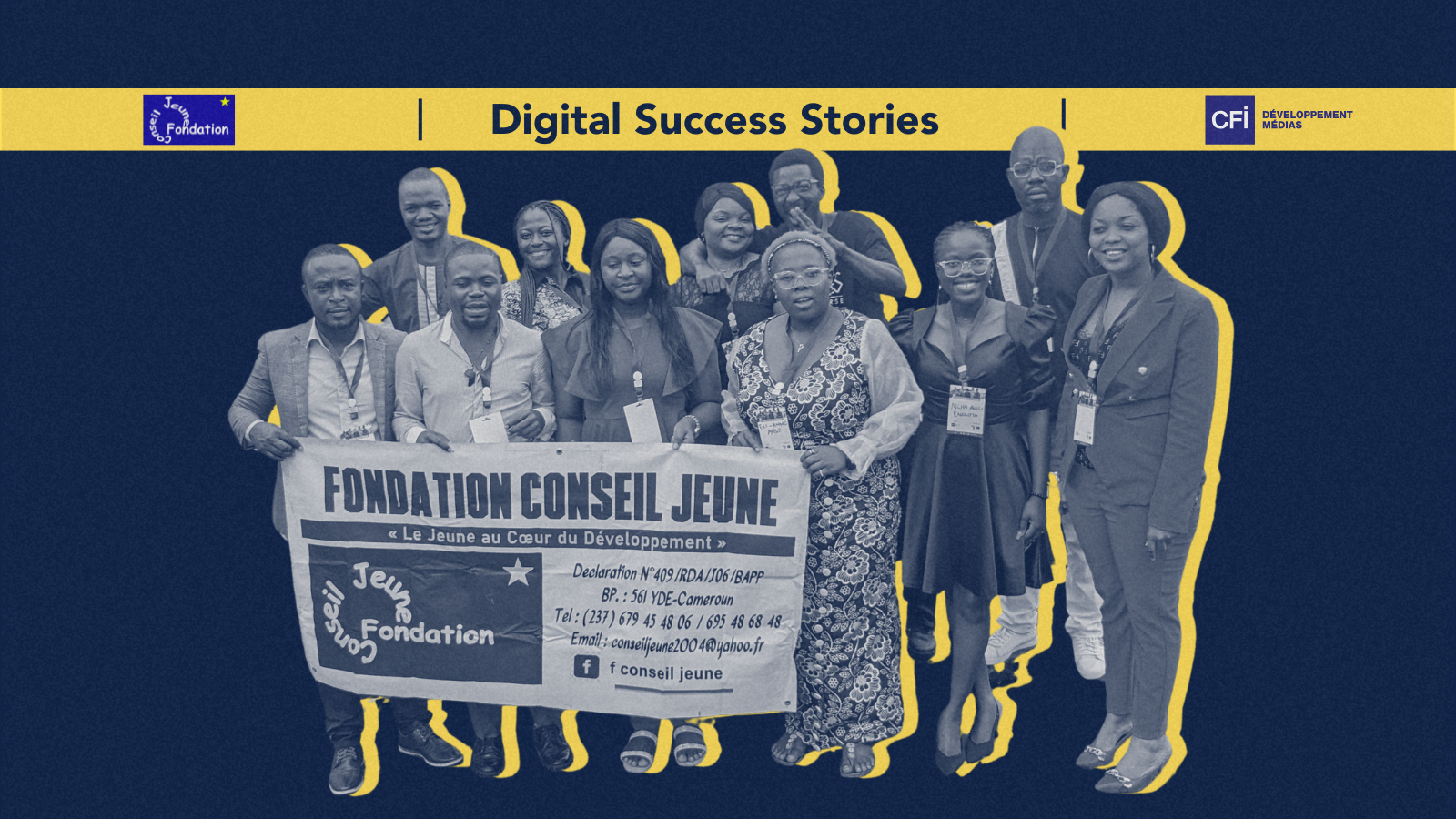
The Fondation Conseil Jeune (FCJ), an association with over 20 years’ experience, was responsible for the third component of the project, the media literacy and digital citizenship workshops. Recognised for its commitment to participatory democracy and digital citizenship, FCJ mobilised its network of youth movements in French- and English-speaking regions. It selected facilitators for the workshops, who were themselves trained by CFI’s international experts. FCJ then supervised the organisation of the workshops for the 30 young beneficiaries in the target regions.
SUCCESS FACTORS

Local anchoring and community participation: From the outset, the project has involved beneficiaries in order to meet their real needs, which has encouraged their support and the sustainability of our actions.
Institutional and partnership support: The support of local authorities, NGOs and international institutions has legitimised the project and facilitated its deployment.
Relevance of objectives and activities: The project has been able to link its actions to the social, cultural and economic realities of the context.
Competence of the project team: The members of the project, trained and committed, have demonstrated their professionalism and excellent knowledge of the field.
Monitoring-evaluation and adaptability: A monitoring-evaluation mechanism has enabled progress to be measured, actions to be adjusted and the overall effectiveness of the project to be improved.
IMPACT
Thanks to the Conseil Jeune Foundation’s workshops, young men and women involved in civil society organisations operating in the regions covered by the project have been trained in media literacy and digital citizenship. They now act as active contributors within their communities, producing and disseminating information that promotes social cohesion and reduces tensions.
