The WYDE Civic Engagement project complements its activities at global and regional levels with ad-hoc country-level support. The overall aim of the Quick-Impact Actions (QIAS) is to provide urgent and strategic support to local actors working on youth political inclusion and participation, always upon request of the […] read more
The legislative elections of July 31, 2022, in Senegal, saw 1,727 candidates: 866 women and 901 men competing across just eight lists, a significant drop from the 47 lists in the 2017 elections. As a result of a sponsorship law introduced in 2018, political parties and coalitions […] read more
In the Democratic Republic of Congo (DRC) the financial burden of financing elections remains a consistent challenge. The country, home to almost 100 million inhabitants, faces significant difficulties with infrastructure and logistics especially in rural areas. This makes transporting electoral materials a cumbersome task, further complicated by […] read more
Since the return to constitutional democracy in 2005, Liberia has successfully conducted four peaceful multi-party elections. These elections have facilitated seamless transitions and been largely deemed free and credible, despite facing numerous institutional and financial challenges. However, beneath this surface of democratic progress lies a complex reality […] read more
Thailand’s general election of May 2023 marked a turning point in its political landscape, with many newcomers, even those with very little prior electoral experience, defeating established incumbents. The result defied polls and academic predictions, implying a shift away from old-money politics in favour of embracing newcomers. […] read more
Over the past two decades, Sierra Leone has made notable strides in consolidating democratic governance and political stability after a decade-long civil conflict. The peaceful transitions of power between the Sierra Leone People’s Party (SLPP) and the All People’s Congress (APC) in 2007 and 2018 also marked […] read more
Nigeria ABSTRACT The #YouthMarchForth for Electoral Reforms 2.0 (#YMF-FER), which ran from March 2021 to February 2022, was a nationwide RTLA day of action project. It was designed in 2020 to engage the RTLA State Chapters as key drivers in advocacy for electoral reforms in Nigeria. It […] read more
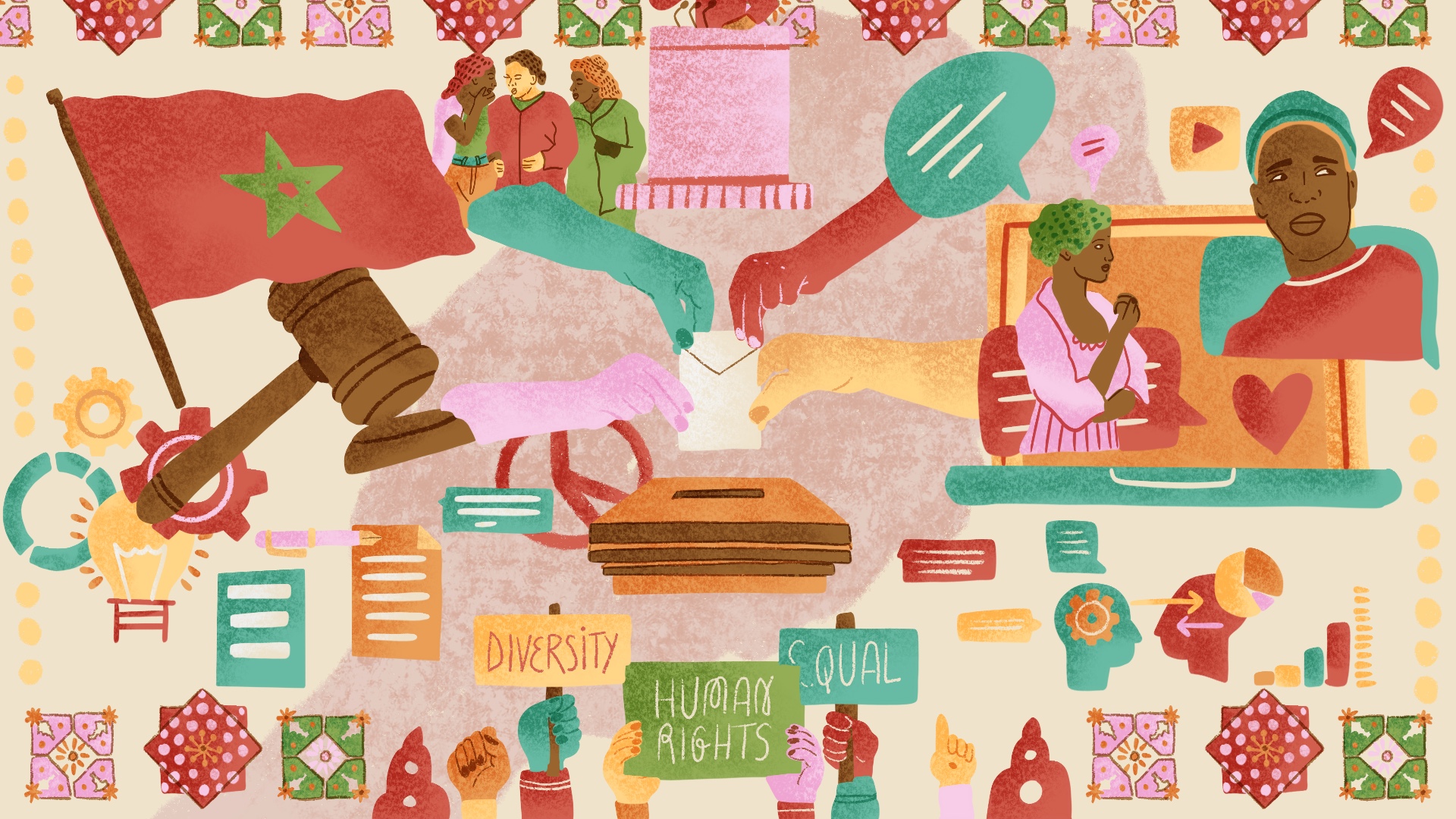
Morocco ABSTRACT Youth participation in politics is a priority topic and first attention of the Initiative Youth Forum (Moroccan Non-Governmental organisation). The group set up a project entitled ‘Empowered Youth Leaders’ (EYL), which engaged a total of 114 direct beneficiaries under the age of 35, benefitting from […] read more
Austria and Albania ABSTRACT In 2007, the voting age in Austria was reduced to 16 years, an approach increasingly being adopted in Europe, notably for the European Parliament elections. However, the spectrum of citizenship education for this age group depends on the type of school and therefore […] read more