Youth Expression and Communication Strategies in Afghanistan
After becoming a nation-state, Afghanistan experienced several waves of attempts at democratisation. The last major effort began in December 2001, when a republican political system re-emerged in the country. Over the following 20 years, until the system’s collapse in August 2021, the people of Afghanistan became increasingly familiar with free speech, elections, and the rule of law, although each of these elements faced significant challenges.
During that period, both men and women hoped for a better Afghanistan and saw education, creativity, and dedication to their goals as vital for social advancement and individual emancipation. A dramatic change occurred when forces of the North Atlantic Treaty Organisation (NATO) and the United States (US) withdrew in 2021, leading to the Taliban’s return to power.[i]
Many people initially assumed that the Taliban, in their second period in power, might adopt a milder and more democratic approach. This expectation was based on the belief that Afghanistan could no longer be governed as it had been from 1994 to 2001, when the Taliban were first in charge. However, this expectation proved short-lived. After March 2022, the Taliban gradually began enforcing their rigid interpretation of religious texts and ideology, building on earlier measures, like a ban on girls’ secondary education. The Taliban imposed restrictions on every aspect of political and social life, initially through informal verbal edicts, which later evolved into formal decrees that are still in force today.[ii]
In this ongoing restrictive environment, where young people have been disproportionately affected by the erosion of democratic norms and civic values, three questions emerge. First, how do young Afghans employ artistic and non-artistic forms of expression to communicate their perspectives and civic ideas without provoking violent retaliation from Taliban rule? Second, what risk-management strategies make such expression viable? And third, what channels and methods do young people use to try to ensure their voices are heard, even in a limited way, under these repressive conditions?

Wasal Naser Faqiryar is a PhD Candidate at Notre Dame University. He pursued his BA in Law and Political Science at Kabul University. Wasal is a co-founder of the Rumi Organisation for Research, with expertise spanning politics, security, and development, and a strong commitment to supporting Afghan youth through academic and research initiatives.
Methodology
This research used a mixed-methods, cross-sectional survey to examine strategies of youth expression under Taliban rule. This approach enabled the systematic documentation of diverse forms of expression, the perceived risks of different communication methods, and the channels through which young Afghans attempt to ensure their voices reach their intended audiences.
A total of 207 participants aged 15–24 took part in the study. The sample included both female and male respondents; 87% were female. The median age was 20. Data was collected electronically through an online survey platform from 22 to 26 September 2025. The survey was distributed through social networks and educational communities that were accessible to young Afghans. Participation was entirely voluntary and anonymous, with no personal information collected beyond the basic demographic characteristics of age and sex. This method was chosen to ensure participants’ safety and encourage honest responses, given the sensitive political context.
Quantitative data was analysed using descriptive statistics appropriate to each data type. Participants’ qualitative responses in Persian, Pashto, and English from open-ended questions were also analysed. This combination of quantitative and qualitative approaches provides a broad and deep understanding of the complex situation facing the young people of Afghanistan. The primary survey data was supplemented by secondary literature.
A limitation of this research is that responses are likely to have been completed primarily by young people living in urban areas who have internet access and take part in educational programmes, potentially excluding the perspectives of those in Afghanistan’s rural regions.
Quantitative findings
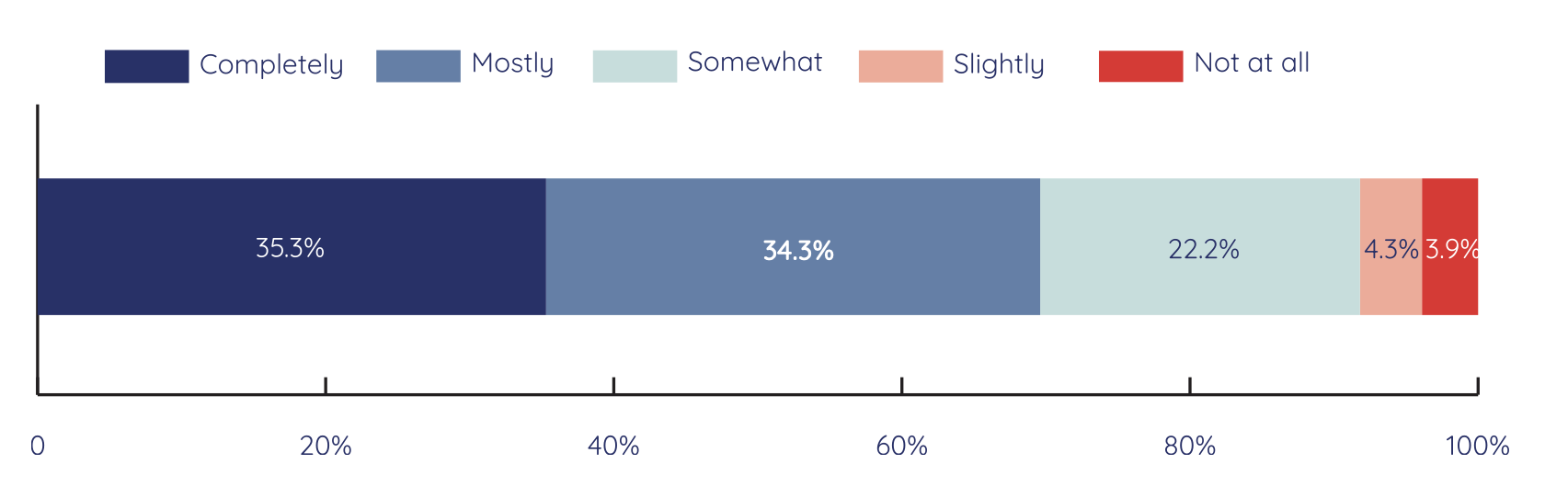
Young people in Afghanistan are at a crossroads of social, political, and economic struggles. Among these, the struggle for self-expression seems to be the most challenging, as the regime deploys several mechanisms to gradually indoctrinate society into following its ideology.[iii] Of the young Afghans surveyed, 69.6% said the Taliban completely or mostly restricted their self-expression, with only 8.2% perceiving slight restrictions or none at all (figure 9.1).
Figure 9.1. Young people’s perceptions of Taliban restrictions on self-expression
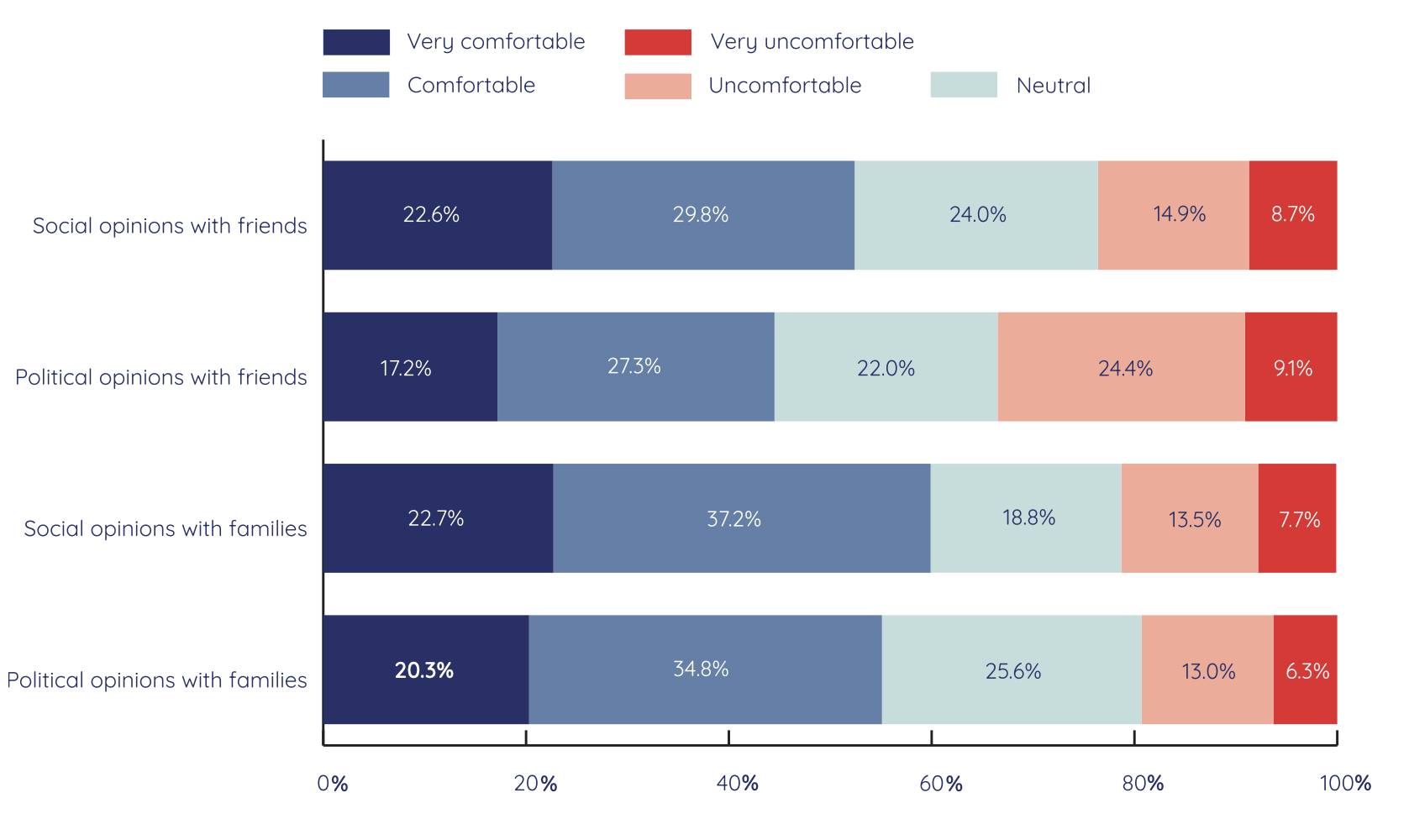
Asked how comfortable they felt expressing their social and political opinions to their families and friends, participants said they were more at ease with family than with friends (figure 9.2). Between 55% and 60% of respondents reported feeling comfortable discussing social and political issues with their families, versus 44–53% with their friends, suggesting that the family is young people’s primary safe space. Across both contexts, respondents felt slightly safer discussing social topics than political ones.
Figure 9.2. Young people’s levels of comfort when discussing social and political views
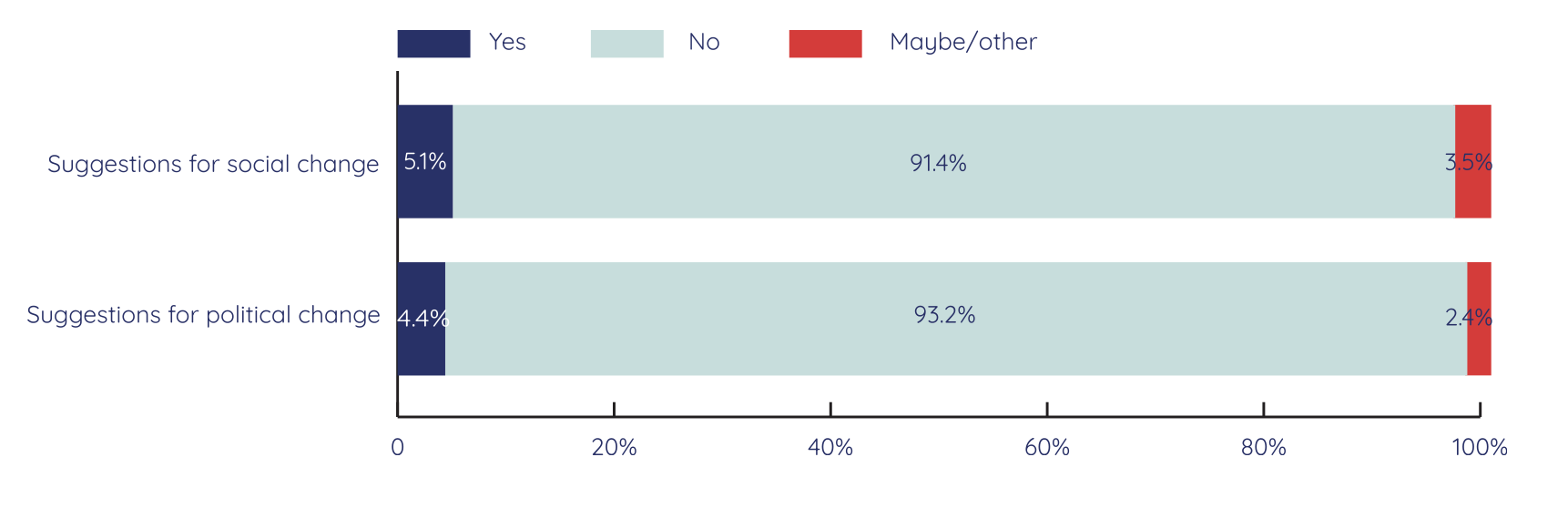
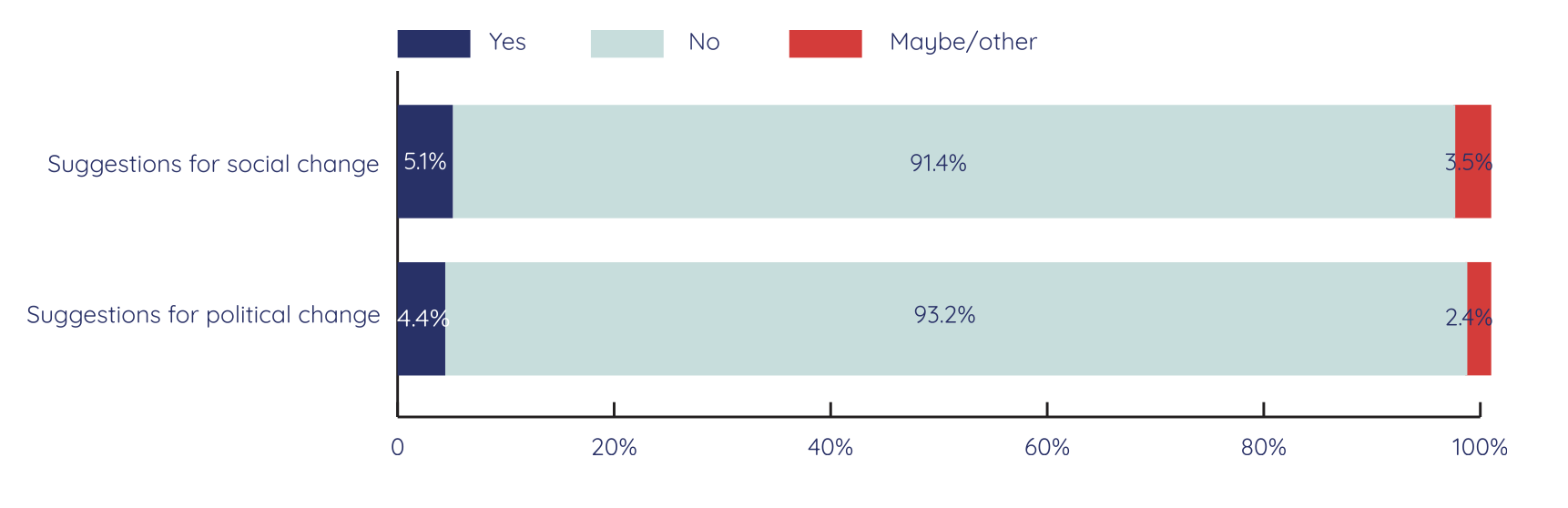
As for the Taliban’s receptiveness and whether they listen to young people, the data shows an overwhelming sense of pessimism. Of those surveyed, 91–93% believed that the Taliban did not listen to their suggestions for change (figure 9.3). This reflects a near-unanimous feeling about the Taliban’s authoritarian rule and refusal to engage with youth voices. Political suggestions fared slightly worse than social ones, indicating that young Afghans believe the Taliban are marginally more closed to political than social input.
Figure 9.3. Young people’s perceptions of whether the Taliban listen to youth voices
The data also shows a massive trust deficit, indicating profound political alienation. Very few young people surveyed believed that Afghanistan’s supreme leader trusted their social or political opinions (figure 9.4). The significant proportion of those who were uncertain about this question – around one-fifth – could reflect several dynamics. Given the regime’s authoritarian nature, where rights are granted rather than guaranteed, this uncertainty might reflect a cautious hope in a context of pervasive mistrust; alternatively, it might indicate confusion about whether any trust exists at all under such opaque governance.
Figure 9.4. Young people’s perceptions of whether the supreme leader trusts youth opinions
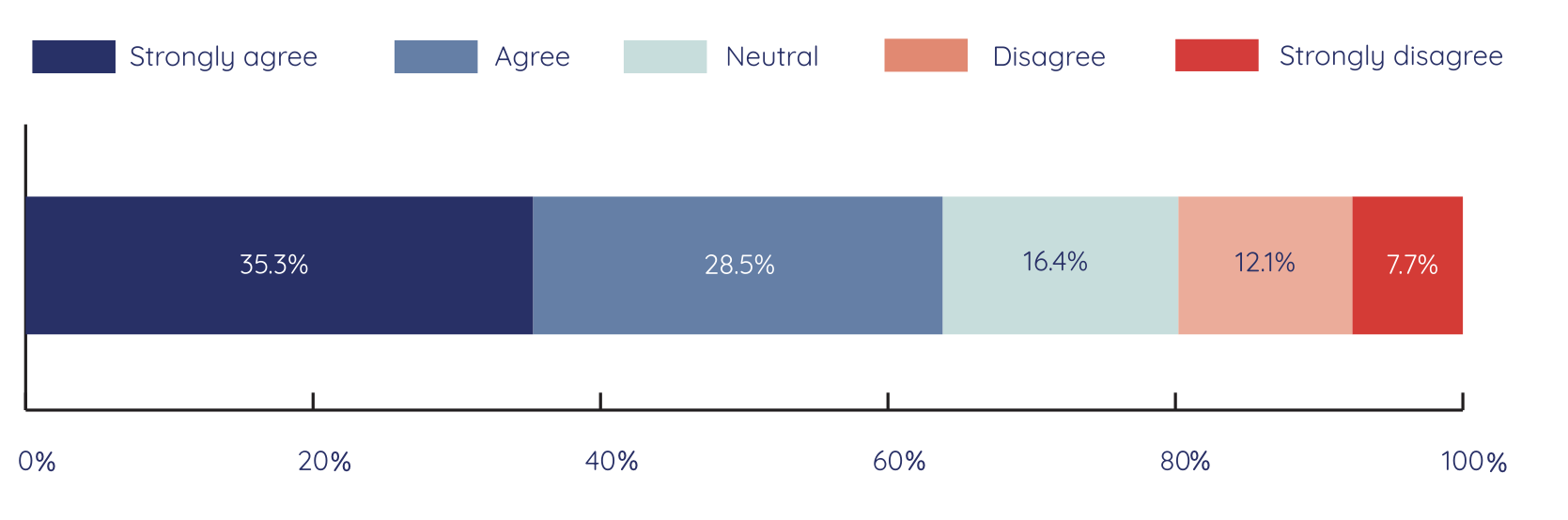
Despite the negative perceptions, restrictions, and overwhelming evidence that the Taliban do not listen to young people, nearly two-thirds of those surveyed maintained hope about their potential to influence change (figure 9.5). This paradox suggests resilient optimism or a belief in long-term change despite the current restrictions. The minimal proportion of respondents who disagreed or strongly disagreed with the idea that they can influence change shows that most young Afghans have not given up on their sense of agency.
Figure 9.5. Young people’s belief in their ability to influence positive change under the Taliban
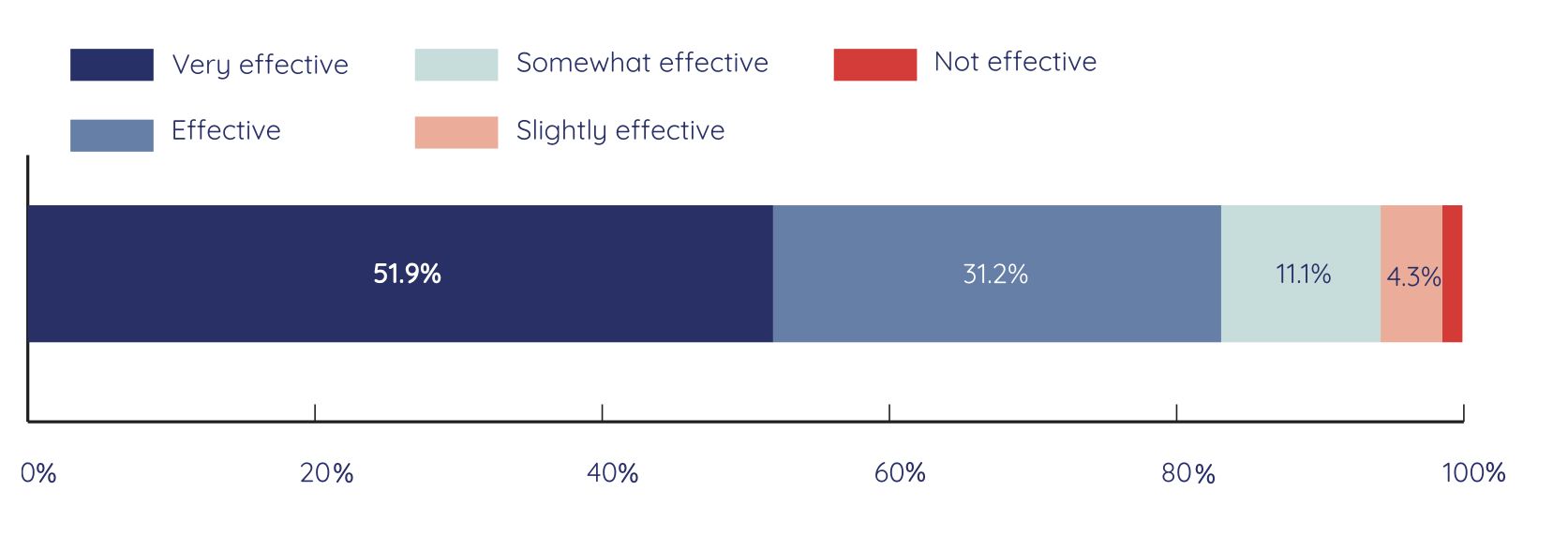
Finally, young Afghans overwhelmingly view art as a powerful alternative channel of expression under restrictive conditions (figure 9.6). The large percentage of those who rated art as effective shows a remarkable consensus on the value of art as a way for young people to voice their concerns.
Figure 9.6. Young people’s perceptions of the effectiveness of art for expressing their concerns
Art in Afghanistan today faces a difficult and tense situation. It is pushed and pulled between two forces, sometimes accepted or praised, sometimes punished or banned. On the one hand, positive art that shows behaviours and actions approved by the regime and gives an appearance of normal life gets the regime’s automatic approval. If art avoids controversy and supports the image of a peaceful, problem-free Afghanistan, it is left alone. On the other hand, when art even hints at rights, women, education, or journalism, or tries to advocate, campaign, resist, or question the status quo, fierce pushback follows – no matter if the artist is a citizen, a tourist, or a resident.
The resulting fear of creating art is made greater by the fact that most rules about art, speech, and behaviour are unwritten, unpredictable, and dependent on who is in power and where the art appears. Outcomes depend on local circumstances, the awareness of the artist, and the influence of those who come to their rescue. This can lead to very different results. Because of this, artists, citizens, and visitors feel lost or fearful, as expectations are clear but punishments are not.
Qualitative analysis
Standing up for civic values and ideas through any form of expression, whether artistic or non-artistic, is dangerous, threatened, and constrained under Taliban rule. Nevertheless, young Afghans make strategic use of various forms of expression while attempting to maintain the viability of these forms through careful risk management. Young people have also identified a range of channels as workable strategies to ensure their voices reach others.
Forms of youth expression
In Afghanistan today, public speeches about political affairs and social matters regulated by the Taliban are not only unsafe but also often perceived by young people as futile. As a result, young Afghans redirect their voices, ideas, dreams, and ambitions to alternative channels through which meaning can be shared while the speaker is protected.
The primary forms of expression identified by respondents include poetry, creative writing, storytelling, painting, drawing, calligraphy, photography, graphic design, handcrafts, embroidery, vlogging, music, and even narrative wishes. All of these activities are performed predominantly in private settings to minimise detection by the regime, except for non-provocative vlogging, which comprises content about daily life or routine activities, adverts, and general content creation.
These creative practices exist along a spectrum from completely private to selectively public. Several young people write under pen names and keep notebooks or notes apps with content they never share, viewing this as the safest way to preserve dangerous or private thoughts. Others choose to publish their creative work online, accepting the risks of doing so.
Digital forms of expression manifest themselves through both anonymous and non-anonymous social media accounts. The former are used predominantly by women, who tend to adopt pseudonyms in keeping with cultural norms about women’s public presence on social media, which also protects those who post criticism of the Taliban. Non-anonymous accounts are more common among men and those women who choose to display their information or pictures as online influencers.
Notably, women use social media, especially Instagram, as a hub to create and publish content on a variety of apolitical and non-social topics, gather followers, and then turn their pages into sources of income through promotions and ads. They are paid between 2,000 and 20,000 afghanis ($32–320) per Instagram post and sometimes receive the products they advertise for free, depending on how many followers they have accumulated. Young men, meanwhile, are more inclined towards creating entertaining content, showcasing infrastructure developments, documenting daily activities, and organising giveaway challenges to engage their followers.
Among the respondents, a poet in Helmand province who composes poems on the situation in Afghanistan explained that writing kept his hope alive. Another respondent identified storytelling as one of the best forms to describe the current situation and pointed to novelist Khaled Hosseini’s books The Kite Runner and A Thousand Splendid Suns as strong examples of works that portray the problems and pains of the previous Taliban period. One respondent said she had submitted poems and stories to international competitions while working on an entrepreneurship project she hoped to fund herself.
Risk-management strategies
The risk-management strategies deployed by young Afghans to make these forms of expression viable are sophisticated and multilayered, reflecting young people’s deep understanding of the surveillance state in which they live. Five strategies stand out.
The first line of defence is anonymity. Young people create fake social media accounts, use pseudonyms, hide their faces by blurring them or deliberately not displaying them, and avoid sharing clear photos that could identify them. One respondent noted that she never shared clear photos online, and that even having a LinkedIn profile with her photo and information caused her stress when strangers message her to ask about her location.
The second critical approach is indirect expression. Young Afghans use metaphors in stories, symbolic art, and drawings; frame their messages around shared cultural or religious values; speak about issues through fictional characters rather than direct commentary; and deploy humour as subtle critique. Many respondents described writing stories in which characters experience what the author feels, allowing them to discuss freedom, girls who want to study, and people who are tired but hopeful, without explicitly identifying these narratives as autobiographical.
Third, private and limited sharing ensures that expression remains within safe boundaries. Content is limited to trusted circles: home-based activities, WhatsApp groups that contain only members known to each other, private conversations with vetted friends, and personal notebooks that the writer has no intention of disseminating publicly.
Beyond these technical and content-based measures, young people employ several interpersonal and behavioural strategies to protect themselves. The fourth tactic, a particularly significant one, is strategic silence. Young people consciously choose when not to express themselves, practise rigorous self-censorship, and maintain complete silence in public spaces where a Taliban presence is likely.
Fifth, respectful communication allows young people to maintain dialogue with ideologically opposed audiences while minimising risk. This strategy involves choosing words carefully, avoiding direct confrontation with figures of authority, speaking respectfully even when fundamentally disagreeing, and connecting messages to religious principles that the Taliban cannot easily dismiss.
For example, one respondent described approaching conversations with Taliban sympathisers by emphasising shared Islamic values rather than secular rights, thereby creating space for dialogue that would otherwise be immediately shut down. Another respondent explained that the only way to persuade Taliban supporters was through mullahs, whom they deeply respect, noting that when ordinary people express the same ideas, they are accused of being non-Muslim.
In addition to these communication strategies, environmental and relational factors significantly shape young Afghans’ expression practices. The need to protect their families informs virtually all young people’s decisions to express themselves: they do not discuss activities with extended family members who might inform the Taliban; parents sometimes do not tell their colleagues about their children’s participation in online education; and young people put the safety of their families before any form of public expression.
Finally, geographic location influences people’s assessment and management of risk. Young people express themselves more freely outside Afghanistan, take greater care in provinces with a heavier Taliban presence, and are acutely aware of regional variations in the enforcement of restrictions.
Amplifying youth voices
Young Afghans use multiple interconnected channels to ensure their voices reach others despite systematic suppression. These channels can be organised into distinct yet overlapping categories that reflect both the opportunities available and the constraints imposed by the regime.
Social media platforms, particularly Facebook, Instagram, TikTok, WhatsApp, and Telegram, are primary channels for amplification. Young people create content designed for viral spread, including shareable images, emotional narratives, and symbolic artwork that resonates beyond the creators’ immediate networks.
Education settings function as channels where voices can be expressed with relative safety. These include English-language courses, computer classes, online university programmes, study circles, and volunteer teaching positions that allow facilitators to share perspectives while ostensibly delivering academic content. One respondent described her work as a volunteer teacher, in which she helped Afghan girls to access education and get psychological and educational advice from professionals while using the platform to discuss strict policies and identify solutions.
Organisations also provide structured opportunities to amplify youth voices. Young people engage through local nongovernmental organisations (NGOs) and international organisations, entrepreneurship learning programmes, and civic leadership initiatives that connect young Afghans to broader audiences abroad and limited resources.
Beyond these formal channels, community spaces, though increasingly restricted, offer limited opportunities for expression. Such spaces include family gatherings where careful conversations can occur; informal home meetings with trusted participants; small, clandestine groups; and neighbourhood networks built on long-standing relationships.
Complementing these local networks, international connections have become increasingly critical as domestic space contracts. Young people contact international organisations and associations by email, take part in international competitions that provide platforms for Afghan voices, engage with foreign media, and connect with foreign and Afghan educators for online language learning, education, or even therapy.
One respondent recounted being interviewed by a Swedish journalist and speaking confidently about themselves, their future, and their country without hiding their face, despite the security risks. The resulting video reached thousands of international viewers and provided a rare moment in which courageous public expression felt possible.
Creative outlets, while severely constrained, occasionally function as channels for youth expression, though with no guarantee of continuity, as Taliban intervention can shut them down at any moment. These outlets include art exhibitions and painting or calligraphy courses that operated briefly after August 2021 before being closed in some provinces while being allowed to continue in others.
Young people are also adaptable when faced with new restrictions. They find alternative platforms when existing ones are blocked or they receive threatening messages; they adjust their content through careful linguistic choices and metaphors to avoid provocation; and they continuously evolve their methods based on ongoing risk assessments.
One respondent from Balkh province detailed how internet cuts lasting more than eight days prevented them from accessing recorded university sessions or attending online courses. These blackouts forced students to rely on expensive mobile data that limited their ability to watch recorded lectures, showing how technological restrictions directly constrain educational access and the amplification of youth voices.
Another respondent recounted posting content critical of the Taliban on their Facebook page. About a week later, the respondent received a message from someone who claimed that their statements about the Taliban were incorrect and asserted that the Taliban were good people. The message warned the recipient not to publish similar content again and threatened them with consequences. Feeling frightened by this threat, the respondent removed the post. After this incident, they changed their strategy by sharing their ideas and thoughts through poetry instead of direct statements.
Conclusion and recommendations
Young Afghans navigate a paradox of persistent agency amid profound constraint: they exhibit a sustained civic consciousness and adopt creative forms of expression even as they face systematic repression under the Taliban. Survey data shows that almost 70% of young Afghans experience severe restrictions on their self-expression, while over nine out of ten believe the Taliban do not listen to their suggestions for change. Despite this overwhelming climate of repression, nearly two-thirds of young people are still hopeful about their potential to influence change, and more than 80% view art as a powerful alternative channel for expression.
Young people in Afghanistan employ diverse forms of artistic and creative expression. These forms exist along a spectrum from completely private to selectively public. The sophisticated risk-management framework identified in this research reveals young people as strategic actors rather than passive victims.
Young Afghans use multiple interconnected channels to amplify their voices. Social media platforms serve as primary channels, with content deliberately designed for viral spread. Education settings provide secondary channels through which perspectives can be shared alongside the delivery of academic content.
Respondents in this study specifically identified strategic communication through religious frameworks as necessary when engaging with the Taliban and their supporters. As such, the international community must leverage technology to expand peaceful and open discourse through religious vlogging and the production of content that counters harmful narratives inside Afghanistan. This content must reach not only Taliban supporters but also conservative families who impose restrictions on their children, to guide them towards perspectives that benefit the country, its society, and its individuals. By documenting daily lives, concerns, hopes, and economic situations while expressing dissent on prohibited subjects, clergy and mullah vloggers can amplify popular sentiments that would otherwise remain beneath the surface.
Since August 2021, young Afghan men and women have been largely forgotten by the international community. Despite young Afghans’ engagement in creative forms of expression, fewer than five NGOs or institutions have organised art competitions in Afghanistan, and almost none has awarded significant prizes or provided the mentorship that young people in the country desperately need. The international community must fund local NGOs or establish competitions with substantial prizes for large numbers of participants to showcase the works of Afghan boys and girls. Merely producing reports on the situation in the country is not, and will never be, sufficient.
Finally, young Afghan men and women need courses to teach them content-creation techniques. These courses must help young people to produce content at global standards to transform them into ambassadors for Afghanistan on the world stage. Despite the unreliability of the country’s internet access – given a two-day nationwide internet and mobile network shutdown in September 2025 and ongoing filtering of social media – Afghans remain thirsty for knowledge and learning. Whether through YouTube, online universities, or other platforms, young Afghans place education at the forefront of their lives.
Just as substantial international support flowed into Afghanistan during the 20 years before the Taliban’s second period in power, such support is needed again. Indeed, the need is now even greater because the conditions are darker than before.
This chapter is part of a Deep Dive of Young Researchers who worked on Youth Participation for three years. This deep dive is a global collection of 12 case studies unpacking how young people are reshaping political engagement.
The Young Researchers’ Network is an initiative developed in the framework of the European Democracy Hub and EPD’s Women and Youth in Democracy WYDE Civic Engagement project, supported by the European Union.
[i] Niamatullah Ibrahimi and Arif Saba, “The Doha Agreement: A Path to Authoritarianism”, in Mapping Futures for Afghanistan, edited by Arif Saba et al. (Routledge, 2025), 70–83, https://doi.org/10.4324/9781032707518-6.
[ii] Sharif Hozoori, “Taliban 1.0 and 2.0 in Afghanistan: Same Policies, Persistent Vision”, Journal of Strategic Security 18, no. 2 (2025): 124–43, https://doi.org/10.5038/1944-0472.18.2.2507.
[iii] Farhat Easar et al., “Education in Afghanistan since 2001: Evolutions and Rollbacks”, Rumi Organization for Research 1, no. 1 (2023): 41, https://rumi.academy/10101010101.pdf.